Continuous Testing is the process of executing automated tests as part of the software delivery pipeline to obtain feedback on the business risks associated with a software release candidate as rapidly as possible.
Benefits
- Better efficiency and higher-quality deployments
- Rapid error discovery and remediation for distributed projects
- Improved user experience
- Minimization or elimination of business disruption and its costs
Types of tests
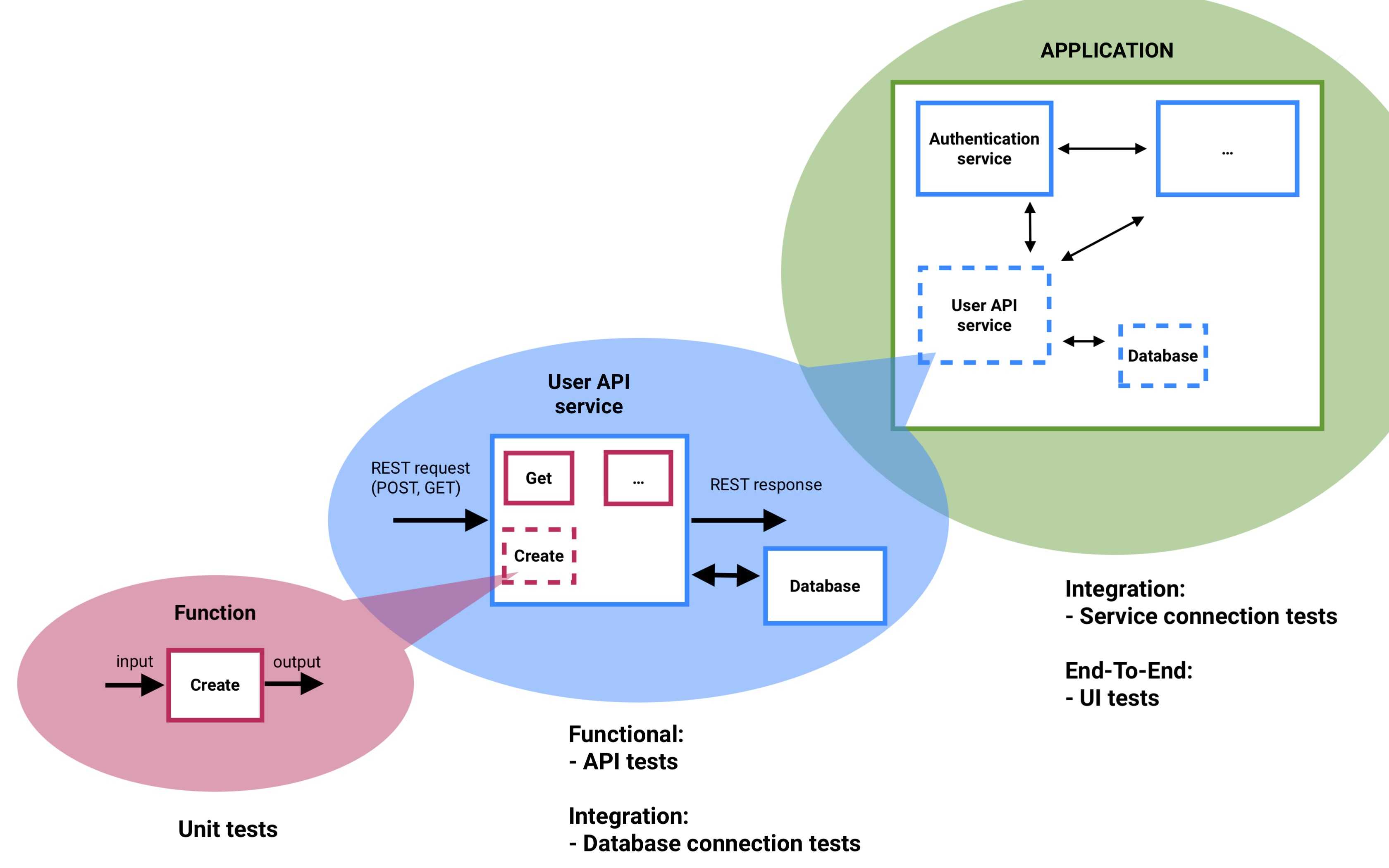
Unit tests:
- The lowest level of testing
- Test an individual unit (or function) of a software
- Tests are run in very controlled environments
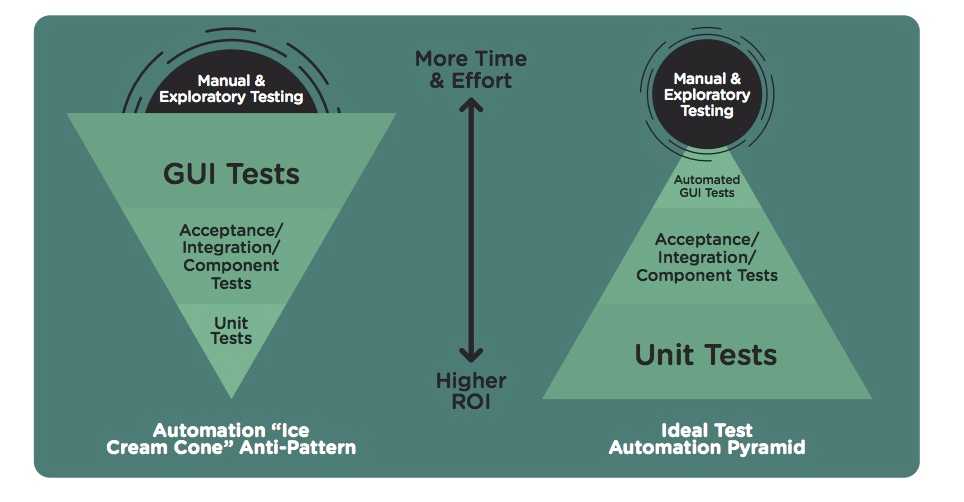
- 90-100% test coverage
Functional:
- Higher-level function testing
- Test outside dependencies
- Example: get a specific value from a database, API
Integration:
- Assemble project modules
- Test how microservices work together
- Example: database connection
End-To-End:
- Test the application in a real environment
- Use a production-like database
- UI testing
- Acceptance testing
Example
Test coverage
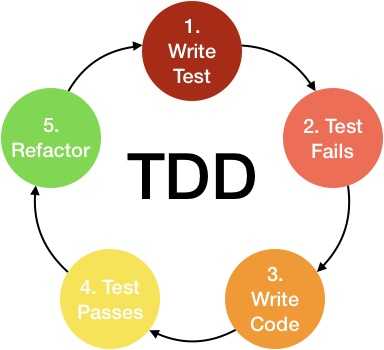
Test-driven development (TDD)
TDD benefits
- Better program design and higher code quality
- Detailed project documentation
- Reduces the time required for project development
- Code flexibility and easier maintenance
- End up with a reliable solution
Test automation
- Run tests on a server with the specific configuration specified in your tests
- Run the tests on different versions of the code
- Condition for Pull Request merge
- On each commit
- Run on your own server
Test writing best practices
- Unit test structure:
- Setup
- Execution
- Validation
- Cleanup
- Avoid anti-patterns:
- test case depending on the system state from the previous test
- dependencies between test cases
- don't inspect more than necessary
- slow running tests